

Key Takeaways
- Florida Attorney General James Uthmeier filed a $5 million civil lawsuit against Jacksonville over an illegal firearm registry maintained from July 2023 to April 2025.
- The lawsuit claims Jacksonville violated Section 790.335 of the Florida Statutes by knowingly keeping records of privately owned firearms.
- The complaint details a chain of approval among officials, highlighting a 2007 memo warning against such a registry.
- Conflicting testimonies complicate the case, with city officials disputing who approved the policy and whether there was criminal intent involved.
- This lawsuit is significant as it tests the enforcement of penalties against local governments for maintaining firearm registries under Florida law.
Estimated reading time: 7 minutes
JACKSONVILLE, FL — Florida Attorney General James Uthmeier filed a $5 million civil lawsuit against the City of Jacksonville on Tuesday, May 12, 2026, escalating the case I covered in March over the illegal firearm registry the city maintained at two government buildings between July 2023 and April 2025.
The complaint, filed in Duval County Circuit Court, alleges Jacksonville violated Section 790.335 of the Florida Statutes, which prohibits any state or local government from knowingly and willfully keeping a list, record, or registry of privately owned firearms or their owners. The state is seeking the full $5 million civil penalty the law authorizes when a city’s leadership is found to have known about or been complicit in the registry.
What is new since my March piece is detail. The complaint names individual city officials, lays out a documented chain of approval, and points to a 2007 city legal memo that explicitly warned Jacksonville officials they could not do exactly what they later did.
How the Registry Worked
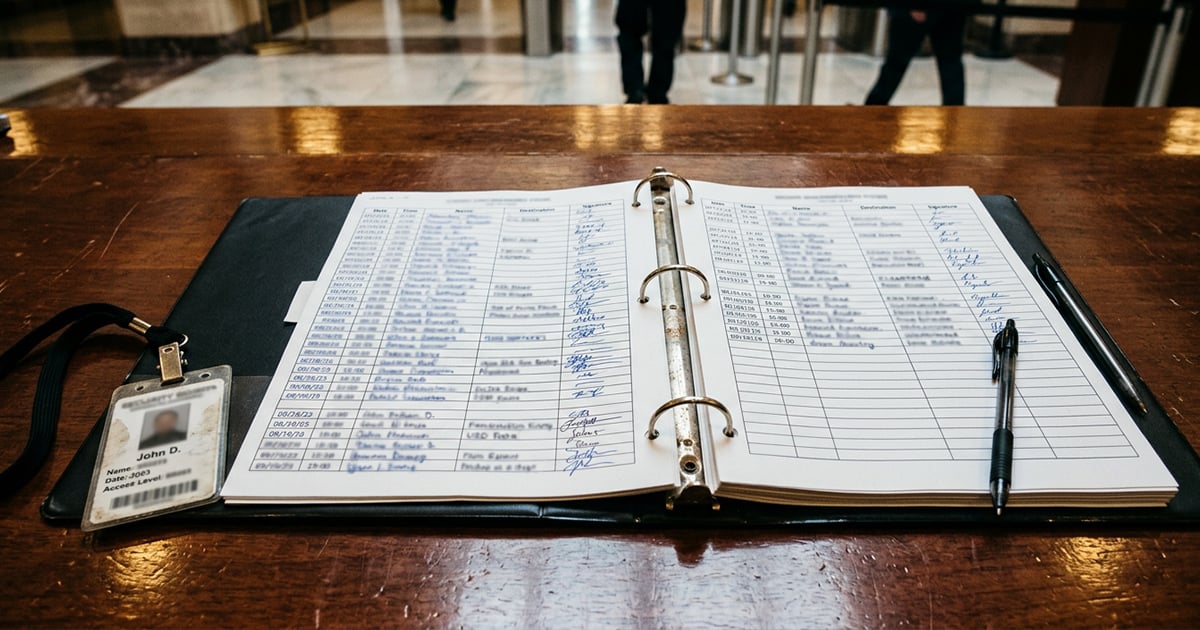
Between July 2023 and April 2025, private security personnel at the entrances to Jacksonville City Hall and the Yates Building, which houses the tax collector and property appraiser, recorded the names, ages, state-issued ID numbers, and firearm types of anyone entering while carrying. The logs were kept in two binders. According to the lawsuit, the practice began after Mike Soto, the city’s facilities manager in the public works department, learned that Florida’s permitless carry law was taking effect on July 1, 2023.
Soto drafted a request on July 3, 2023, asking the city’s Office of General Counsel for a legal interpretation of the new constitutional carry law. He also emailed his proposed security changes to then-Deputy Chief Administrative Officer Dr. Charles Moreland. The lawsuit alleges Moreland approved the policy on or around July 13, 2023, with one modification removing a proposed cap on how many firearms a visitor could bring into a city building. Soto then instructed the private security contractors to begin using the logs. The first entries appeared on July 20, 2023.
The registry ended in April 2025 after a resident attempted to enter a city building while lawfully carrying, refused to provide the information requested by security, was unlawfully denied entry, and filed a complaint.
The 2007 Memo
The most damaging new fact in Uthmeier’s complaint is that the city was on written notice for nearly two decades before any of this happened. According to the suit, Jacksonville’s own Office of General Counsel issued a legal memo in 2007 addressing whether the city could restrict concealed carry permit holders from entering city buildings with firearms. That memo made clear that any policy addressing concealed weapons in city buildings could not include the creation or maintenance of a gun registry.
Uthmeier’s argument is direct. If the city had a written legal opinion from its own attorneys on the books that explicitly prohibited this practice, then when city management approved the gun logbook in 2023, that approval was made with full institutional knowledge that Florida law prohibited it. That is precisely what the $5 million penalty provision in Section 790.335 was written to punish.
Conflicting Testimony
The investigation conducted last year by State Attorney Melissa Nelson produced two competing accounts. Soto told investigators that he sent Moreland the proposed policy and later got verbal approval over the phone, including the specific carve-out that visitors could not be limited in how many firearms they brought inside. Moreland told investigators that he never opened the file Soto sent, has no memory of any conversation about a logbook, and would have raised concerns and consulted city legal staff if he had known the policy involved a written gun registry.
That dispute is now headed to court. Resolving who actually approved what, and whether the approval rose to the level of knowing complicity by city management, is at the center of whether Florida can collect the full $5 million.
More from USA Carry:
Why the State Attorney Did Not Prosecute
Nelson declined to file criminal charges last year. Her report concluded that the registry violated Florida law, but that the policy was the work of a single manager, was not approved by any senior official, and that there was no evidence of criminal intent. Uthmeier disagreed with that interpretation in a March 2 letter to Nelson’s office, calling her statutory analysis unable to withstand scrutiny. He has now backed up that disagreement with a lawsuit.
Uthmeier does not have authority to bring criminal charges where the State Attorney has declined. He does have explicit statutory authority under Section 790.335 to bring a civil action and seek the $5 million penalty, which is what he has done.
The City’s Response
Mayor Donna Deegan’s office reissued the statement it gave when Uthmeier first announced his investigation. “As we have stated from the very beginning, the records will show that Mayor Deegan and her leadership team were unaware of this action taken by an individual employee concerned about building security, and that the practice was immediately ended once it became known.”
The lawsuit does not name Deegan personally. Whether she personally knew about the policy may not matter legally. The statute allows the penalty when the registry was maintained “with the knowledge or complicity of the management of the governmental agency,” which the complaint alleges was met through Moreland’s role as Deputy Chief Administrative Officer at the time of approval. A deputy CAO sits squarely within “city management” under any normal reading of that term.
Deegan was more direct in her own remarks. “This seems, as I’ve said before, we’re in silly season now. We’ve got elections coming up in November and again in March, and he’s running. And I expect this to continue unabated until after the election season.”
Why This Case Matters Beyond Jacksonville
This is the first time Florida has actually pursued the $5 million penalty under Section 790.335. The statute has been on the books since 2004. It was written specifically to make sure no local government in Florida could quietly build a list of who in town owns a firearm. Until this case, the penalty provision had never been tested in court.
If Uthmeier wins, every city and county in Florida will know exactly what the cost is of maintaining a firearm registry. If he loses, the preemption statute loses most of its teeth, and the next city that wants to start logging gun owners will know it can probably get away with it as long as the policy can be pinned on a “rogue” manager.
The Second Amendment is treated as a fundamental civil right under Florida law, and the prohibition on local gun registries exists for a simple reason. Once a list of lawful firearm owners exists, that list is a target. It can be stolen, leaked, subpoenaed, or weaponized politically against the people on it. The Jacksonville registry was small, just over 140 entries covering more than 100 individuals, but the principle is not about the number. It is about whether the government can quietly build a list of you because you exercised a constitutional right walking into a building you have every right to enter.
I will be tracking this case in Duval County Circuit Court and will update USA Carry as the city files its response and the case progresses.